
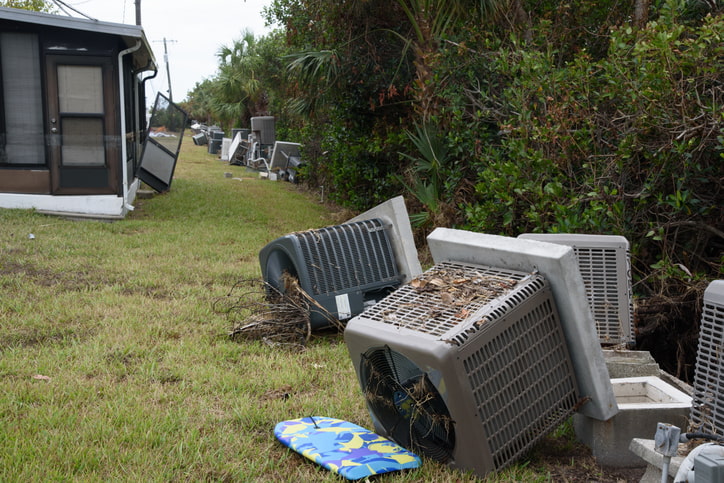
Hurricane Isaias is tracking toward the Alabama Gulf Coast with 110 mph winds forecast by Friday morning, a Category 2 storm aimed squarely at Mobile Bay. The National Hurricane Center’s latest advisory projects landfall near the Alabama-Mississippi border on October 10, with tropical storm-force winds extending 140 miles out from the center. That wind field reaches Mobile, AL, well before the eye does. Storm surge, flying debris, and sustained winds above 100 mph are all on the table, and each threat puts your air conditioner at serious risk. Replacing a storm-damaged AC system runs $5,000 to $12,500 or more, and post-storm demand means waiting weeks for parts and service technicians. If you haven’t started taking steps to protect your AC system in Mobile, AL, from a hurricane, the window is closing fast.
What Isaias Can Do to Your Outdoor AC Component
Isaias isn’t a slow, grinding storm. The NHC forecast discussion notes a fast forward speed at landfall, which means the wind field will sweep across Mobile, AL, quickly with little time for conditions to ease between bands. The outdoor portion of your AC system faces three distinct threats from this storm.
First, sustained winds at Category 2 strength can displace an unanchored outdoor component entirely, snapping refrigerant lines at the service valves and leaving you with a full system replacement rather than a repair.
Second, Isaias is expected to produce life-threatening storm surge along the northern Gulf Coast. Any outdoor component sitting on a low slab in a surge zone will be submerged, with saltwater saturating the electrical connections, corroding the contactor and seizing the fan motor.
Third, the rapid intensification forecasters flagged means debris fields will be intense. Coil fins bent by flying debris can cut airflow efficiency by 10 to 40 percent, even when the rest of the system survives intact.
- Fast-moving storms like Isaias deliver sustained wind damage across wide areas rapidly.
- Storm surge saltwater destroys electrical connections and corrodes critical components.
- Debris-bent coil fins reduce system efficiency long after the storm passes.
Secure the Outdoor Component Before Isaias Arrives
With landfall forecast for late Friday night, Mobile, AL, homeowners have Wednesday, Thursday and early Friday to act. The most effective single step is anchoring the outdoor component to its pad with hurricane straps rated for your system’s weight. An unstrapped component on a standard concrete pad has no resistance to lateral wind loads above 80 mph. Straps bolted through the pad change that equation entirely.
Beyond anchoring, build a debris shield using half-inch plywood cut to the component’s height and secured with ratchet straps. Avoid tarps, which catch wind and create pressure against the coil. The plywood deflects branches and street debris without trapping moisture against the fins. If your outdoor component is in a known surge zone near Mobile Bay or the causeway, contact Air Specialty today about temporary elevation or relocation options before the storm makes landfall.
- Hurricane straps bolted to the pad resist lateral wind loads above 80 mph.
- Plywood shields deflect debris without creating the tarp’s destructive sail effect.
- Surge-zone components may need temporary relocation before Friday’s landfall window closes.
Shut Down the System the Right Way Before the Storm Hits
Turn Off at the Thermostat First
Set your thermostat to “off” before tropical storm-force winds arrive in Mobile, AL, which could happen as early as Friday afternoon given Isaias’s wide wind field. Running an AC system during a hurricane pulls rain-saturated, debris-laden air through the return, deposits moisture throughout the ductwork, and exposes the compressor to electrical surge events triggered by the storm’s lightning and grid fluctuations.
Cut Power at the Outdoor Disconnect Box
After the thermostat is off, flip the outdoor disconnect box — the metal box mounted near the outdoor component — to the off position. This severs the system from the main electrical feed completely. The NHC is forecasting a Hurricane Warning for southern Alabama, and that brings near-certain power outages and grid surges. An isolated system cannot be damaged by what it isn’t connected to.
Don’t Restart Until a Service Technician Inspects the System
After Isaias passes, the instinct to flip the system back on is understandable. Mobile, AL, in October is still warm and humid. But restarting a system with surge-damaged wiring, a moisture-soaked air handler or a bent fan blade can destroy the compressor in a single cycle. Air Specialty will be running post-storm AC inspections as soon as roads are clear. Get on the schedule now.
- Shut off at the thermostat before tropical storm winds reach Mobile Friday afternoon.
- The outdoor disconnect isolates the system from grid surge events during the storm.
- A single restart on a damaged system can destroy the compressor beyond repair.
Protect Your AC System in Mobile, AL, Before Hurricane Isaias Arrives
Isaias has a Hurricane Warning posted for southern Alabama and a life-threatening storm surge forecast for the northern Gulf Coast. Mobile, AL, is directly in the cone, and Thursday is the day to act. Homeowners in Mobile, AL, who protect their AC system from a hurricane before landfall are the ones who come out the other side with a system that restarts cleanly, not one that needs a $10,000 replacement. Call Air Specialty for a pre-storm AC inspection if you have any doubts about your system’s vulnerability.
Image provided by iStock